















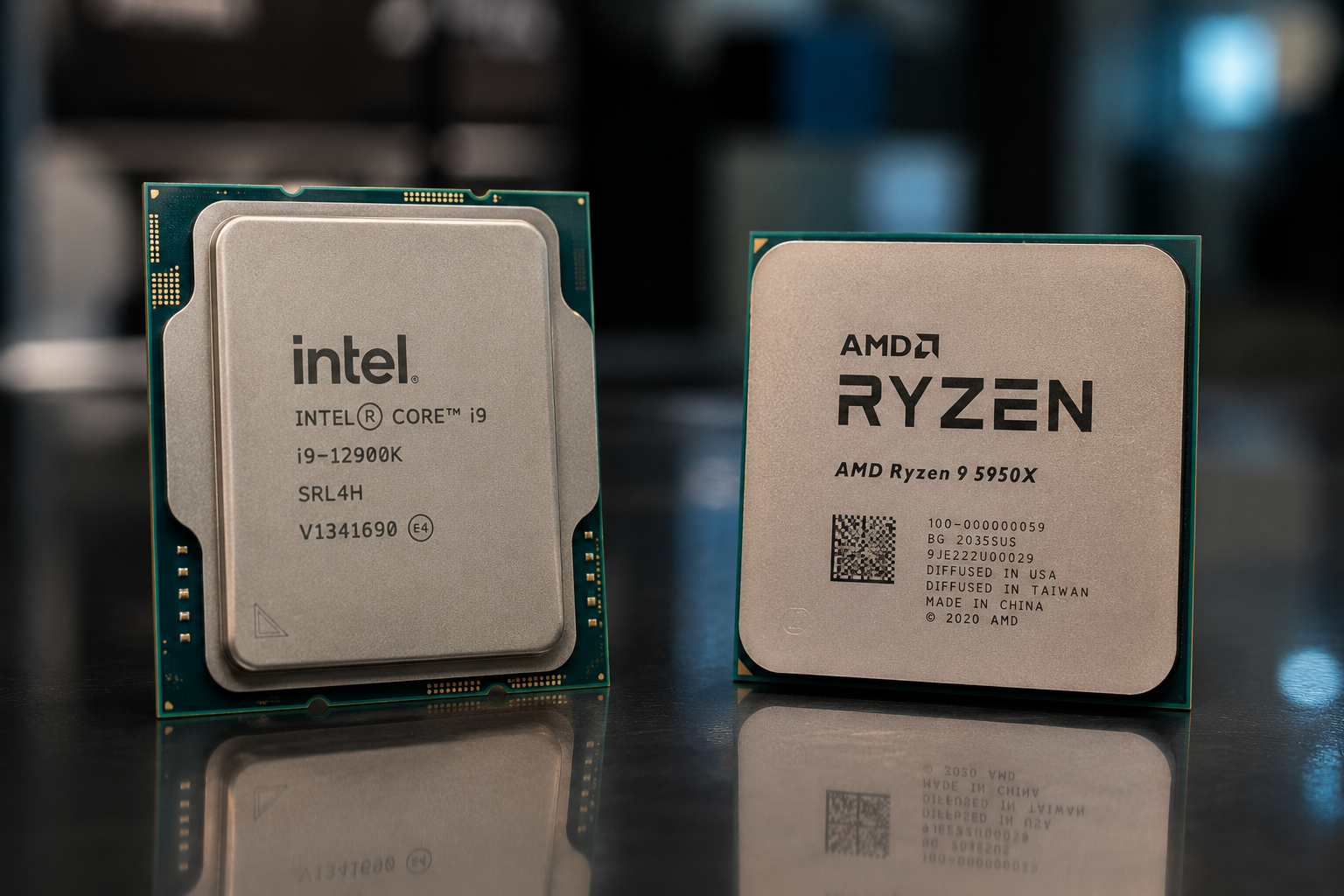

Intel, AMD and Broadcom shares moved lower on Wednesday as global equities paused after a four-day winning streak, with rising oil prices and higher Treasury yields weighing on investor sentiment.
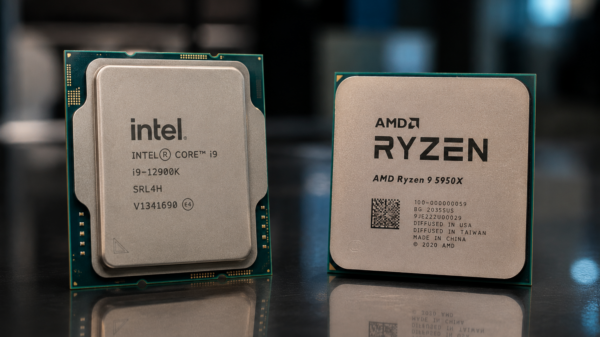
Intel INTC, AMD, and Broadcom stocks were all down by 2%.
The Philadelphia Semiconductor Index was also down around 1.4%.
The retreat came as investors awaited further developments in Middle East peace efforts, while crude prices moved higher.
Brent crude futures for November delivery were last seen around 2% higher at about $101 a barrel, while US West Texas Intermediate crude futures gained about 1% to around $91.
Treasury yields also moved sharply higher after stronger-than-expected purchasing managers’ index readings pointed to resilient US economic activity.
The 10-year Treasury yield reached 5.058%, its highest level since July 2007, while the two-year yield gained almost 10 basis points to 4.874%.
Higher oil prices can feed into broader inflation pressures, potentially forcing central banks to maintain or intensify restrictive monetary policy.
That, in turn, can push bond yields higher and weigh disproportionately on high-growth technology and semiconductor stocks, whose valuations rely heavily on earnings expected further into the future.
Fed funds futures traders were pricing in 73% odds of an October rate hike, up from 53% earlier.
Federal Reserve Governor Michael Barr added to the hawkish tone on Wednesday, saying the central bank had taken an important step last week to “recalibrate” short-term borrowing costs to bring down inflation and would likely need to deliver further interest-rate increases.
Barr said inflation remains above the Fed’s 2% target and is not clearly moving toward it quickly enough, while describing the economy and labour market as strong.
Broadcom faces additional China risk
Broadcom’s decline also came as investors digested a Financial Times report that Chinese authorities are examining the company’s hardware deployments in state-backed data centres.
According to the report, the State-owned Assets Supervision and Administration Commission, or SASAC, has been surveying the extent to which Broadcom switches are used across state-controlled data centres as Beijing pushes to reduce reliance on foreign AI infrastructure.
The survey reportedly found that Broadcom switches could account for as much as 90% of equipment in use at some facilities.
Based on preliminary findings, SASAC could issue informal guidance encouraging state-run data centres to reduce their reliance on Broadcom switches as part of China’s broader “domestic chips for domestic use” campaign.
The development adds another geopolitical consideration for Broadcom as China seeks greater technological self-sufficiency and supply-chain resilience.
Intel and AMD retain AI-driven gains
Despite Wednesday’s decline, Intel and AMD remain sharply higher over the past five sessions after investors responded positively to the growing popularity of Meta’s Muse AI agent.
Intel has gained about 14% over the period, while AMD is up roughly 15%.
AMD also crossed the $1 trillion market-capitalisation threshold for the first time on Monday after a surge in semiconductor stocks.
Expansion of agentic AI could increase demand for CPUs alongside GPUs.
AI agents perform more complex tasks autonomously, requiring additional computing for orchestration, data movement and workflow execution.
Meta has previously said that as its agentic AI efforts advance, “compute requirements are evolving to demand more CPU.”
That shift could expand the addressable market for Intel, AMD and Arm, which all have exposure to the server CPU market.
CPU demand provides a longer-term catalyst
Intel CEO Lip-Bu Tan recently said the company could currently meet only about 50% of customer demand, highlighting how quickly demand for computing infrastructure has increased.
The supply constraint comes as AI inference and agentic workloads require more CPU resources than traditional chatbot applications.
AMD estimates that the server CPU market could grow more than 35% annually to reach more than $120 billion by 2030.
The company has subsequently outlined a potential $220 billion opportunity as agentic AI adoption accelerates.
That creates a potentially important longer-term growth narrative for Intel and AMD, even as Wednesday’s market move highlights their sensitivity to macroeconomic conditions.
With semiconductor stocks remaining highly sensitive to shifts in yields, oil prices, and Fed policy signals, many traders track these swings in real time through top online trading platforms.