
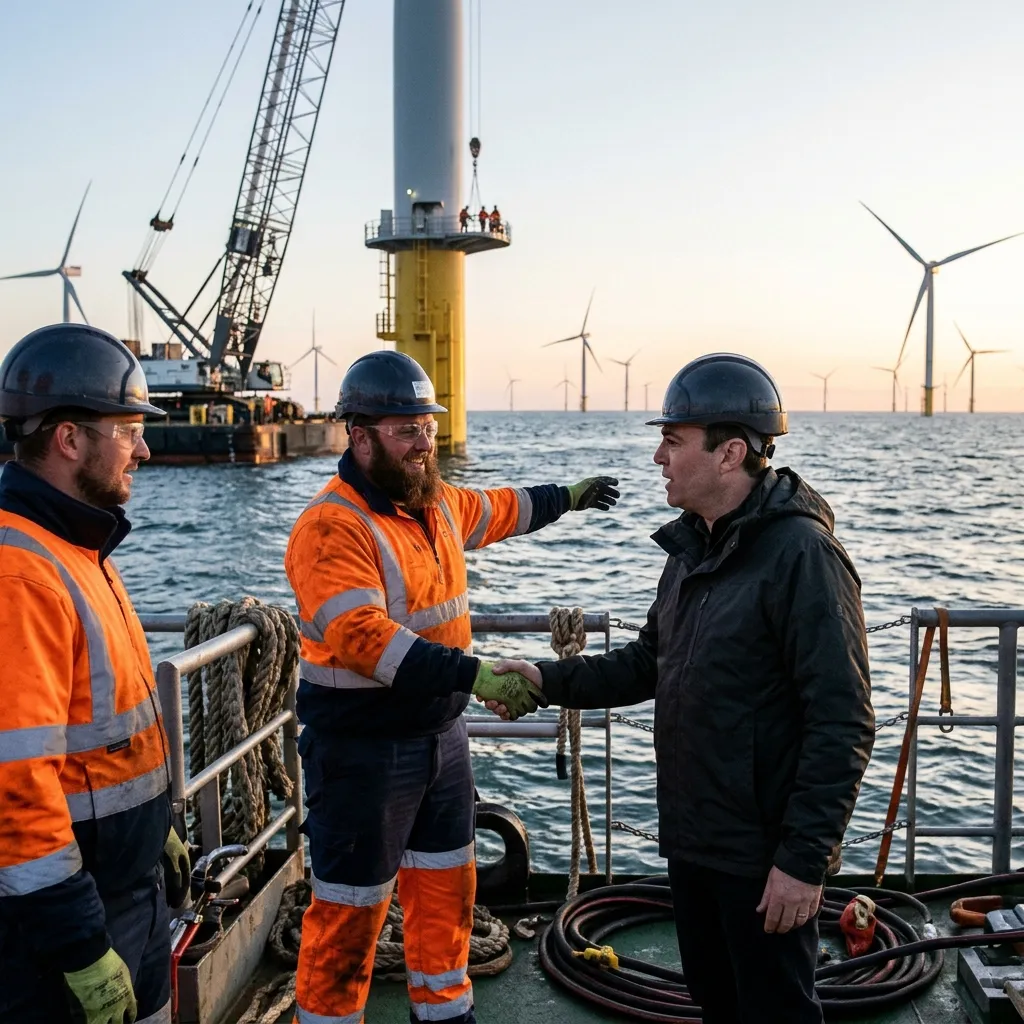
Andy Burnham has welcomed a landmark twelve billion pound investment in offshore wind energy, describing the move as a significant vote of confidence in the United Kingdom’s industrial capacity. The funding, provided by German energy giant RWE and American private equity firm KKR, will fuel the development of the Vanguard West and Vanguard East windfarms off the coast of Norfolk. This massive injection of capital arrives at a critical moment for the administration as it prepares to represent the country at the Cop31 climate summit in Turkey.
Beyond the environmental benefits, Burnham emphasized that increasing domestic energy production provides essential security for consumers. He noted that every new turbine helps shield bill payers from volatile global events by putting more power under British control. Along with the private investment, the state owned national wealth fund is contributing one billion pounds to ensure these projects get moving quickly. Construction is slated to begin early next year, with an aim to have power flowing into millions of homes by 2030.
The economic ripple effects are expected to be substantial across various coastal regions. RWE estimates that the Vanguard project will generate roughly 2.8 gigawatts of electricity—enough for three million households—while supporting twenty three hundred jobs annually throughout its supply chain. Similarly, SSE announced progress on its Berwick Bank B project off Scotland’s east coast, which is expected to sustain thousands of existing roles, reinforcing Energy Secretary Miatta Fahnbulleh’s claim that Britain is becoming a renewable energy powerhouse.
However, this surge in wind investment follows a period of intense scrutiny regarding the government’s broader ecological strategy. Critics and some Labour MPs have voiced frustration over the approval of the Jackdaw gasfield in the North Sea and the recent rejection of a major solar farm near Blenheim Palace due to green belt concerns. As Burnham heads toward his scheduled speech at Cop31, this record breaking wind deal serves as a vital piece of evidence intended to prove that the government remains committed to reaching net zero despite contradictory decisions elsewhere.