
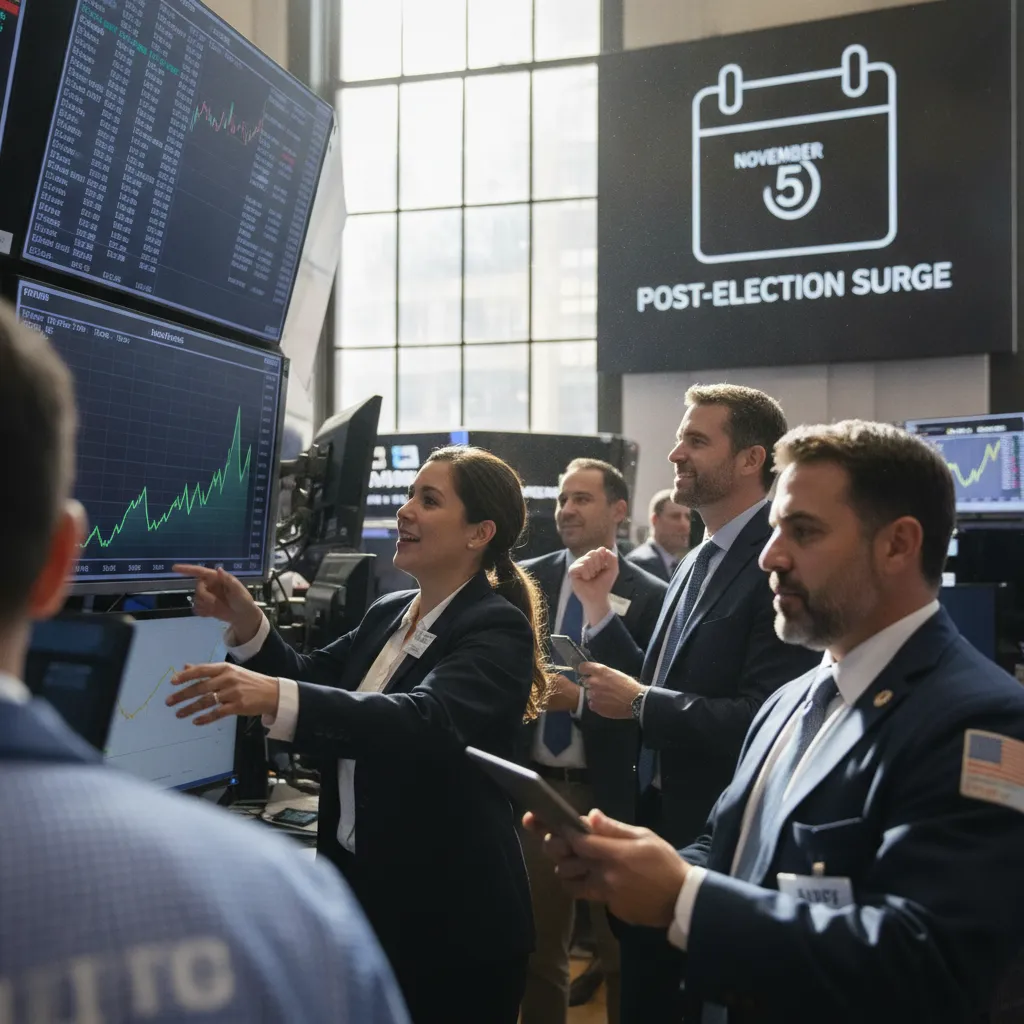
As the 2026 midterm elections approach, investors are naturally questioning how the political shakeup will impact their portfolios. While the tension surrounding who controls Congress often dominates the news cycle, historical data suggests that the act of voting itself may actually be a catalyst for growth. According to a century of data analyzed by Morningstar, stocks typically experience a post-election pop in November. On average, markets have climbed 2.4 percent in election-year Novembers, significantly outpacing the 0.9 percent gain seen in non-election years.
Financial experts argue that this trend isn’t necessarily about which party wins, but rather about the resolution of suspense. Markets famously despise uncertainty, and once the results are tallied, traders can stop speculating about what might happen and start reacting to what actually did happen. This sense of closure allows the market to move forward, coinciding with a seasonal lift driven by holiday consumer spending. However, this stability depends entirely on a clear result. History shows that when outcomes linger or become contested, as they did in 1948 and 2000, the market reacts with volatility and anxiety.
While long-term trends show that midterm years can sometimes be sluggish compared to other years, current performance tells a different story with the S&P 500 already up roughly 12 percent this year. There is also evidence from Fidelity suggesting that the real rally happens in the twelve months following a midterm election, where gains historically jump far higher than they do in the lead-up to the vote. Whether the government ends up unified or divided appears to matter less than common wisdom suggests; while unified governments slightly outperform divided ones due to their ability to pass policy, markets have generally thrived under both systems.
Despite these optimistic patterns, analysts warn that potential chaos or interference at the polls could trigger sharp reactions in the coming days. If doubt lingers regarding the legitimacy or accuracy of the count, shareholders should expect some turbulence. Nevertheless, seasoned advisors suggest that the best strategy during such swings is patience. By staying bullish on the country’s long-term resilience and ignoring short-term headlines, investors can avoid making emotional mistakes during a predictable window of political noise.